Your CTO Shouldn't Be Alone
The CTO of a growing company is the loneliest role on the org chart. Overwhelmed between operations and strategy, with no peer to challenge decisions against. Strategic reinforcement exists, and it works.
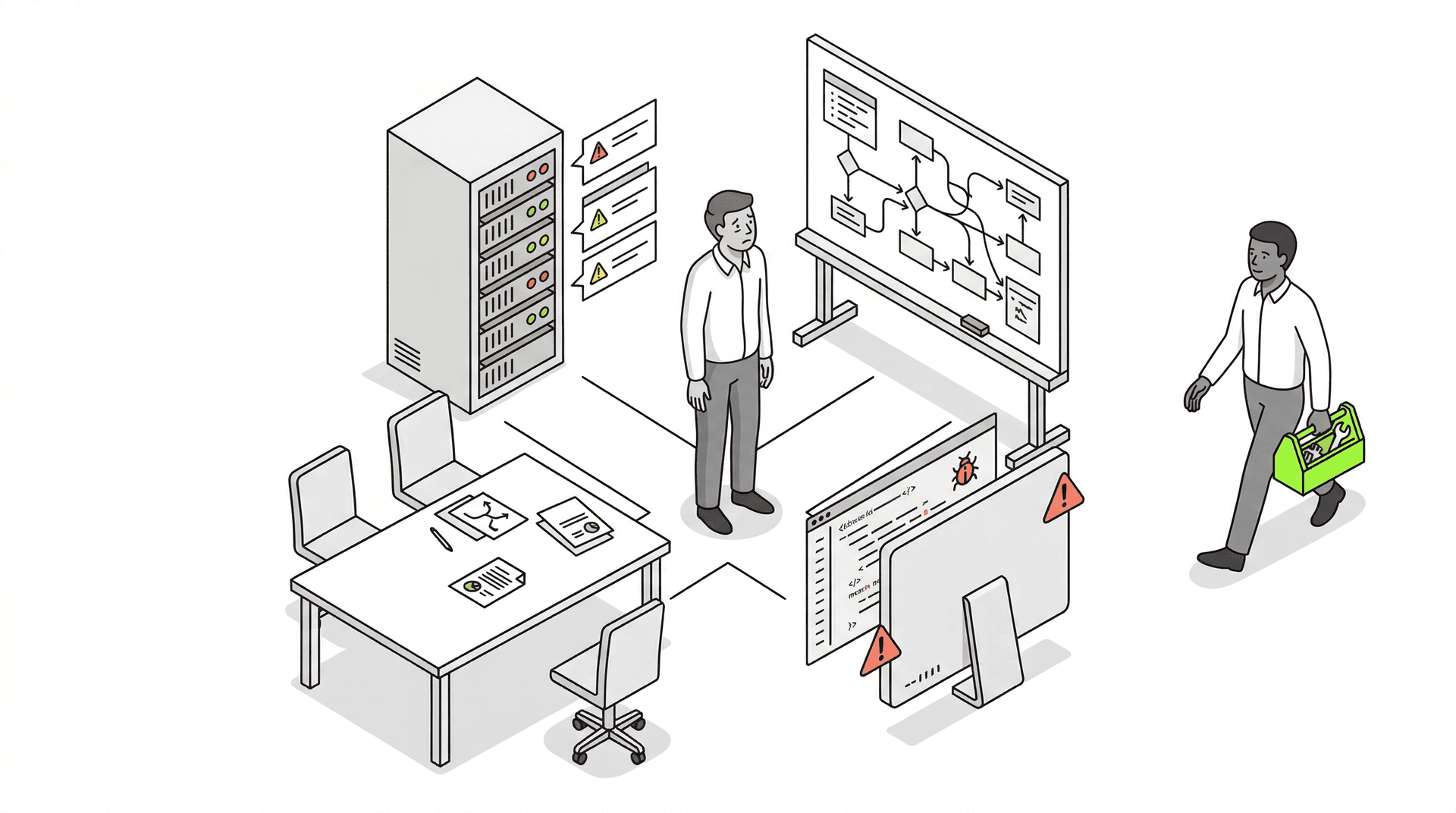
The CTO of a mid-sized company attends an average of 14 meetings a week. Keeps the infrastructure running. Evaluates vendors. Designs the architecture for new projects. Puts out production fires. Tries to carve out time for medium-term strategy. And most of the time, does all of this with nobody around who truly understands what they're talking about.
This isn't a competence problem. It's a professional loneliness problem. The CEO trusts them but can't audit their decisions. The CFO sees invoices climbing without understanding why. The development team needs them to unblock issues daily. And meanwhile, the decisions that will define the company in three years are made in a rush between two meetings, without a second opinion from anyone.
I've spoken with dozens of CTOs in this situation. None of them complain that the work is hard. They complain that it's lonely.
The loneliest role in the company
A CEO has a board of directors, legal advisors, a CFO to cross-check the numbers with. A sales director has a sales team, market benchmarks, CRM data. The CTO has a technical team looking up at them waiting for direction and a leadership committee that doesn't speak their language.
It's the only C-level role that lives in two worlds at the same time. Translating business into code in the morning and code into business in the afternoon. And in both worlds, they lack a counterpart who understands both sides.
This creates a pattern we see frequently at SAUCO: the CTO ends up making every technical decision alone. Not because they want to hoard control. Because there's nobody to share those decisions with. They pick the stack alone. Define the architecture alone. Evaluate vendors alone. And when one of those decisions turns out to be wrong, no one had challenged it beforehand.
This isn't an ego problem. It's an organizational design problem. The company expects a single person to handle strategy, management, and execution simultaneously, without support from a peer with comparable technical judgment. No other leadership role works this way.
What nobody sees: the cost of overload
When a CTO is overwhelmed, they don't stop working. They stop doing strategy. And the difference between those two things is what it costs the company -- without anyone keeping track.
Technical debt piles up because there's no time to address it. Vendor evaluations get resolved with the first option that "more or less works." Architecture decisions are made under pressure, optimized for the short term. Necessary migrations get pushed back quarter after quarter because something more urgent always comes up.
The result is a growing gap between what the company's technology should look like and what it actually is. And that gap has a cost: projects that fall behind, integrations that don't scale, systems nobody wants to touch because "if it works, don't touch it."
The worst part is the CTO knows. They watch the debt accumulate. They know the decision they made eight months ago in a hurry wasn't the best one. But they're too busy putting out today's fire to go back and fix yesterday's.
An industrial company we worked with had a solid CTO who had been putting off their legacy ERP migration for three years. Not because they didn't know how to do it, but because every quarter something more urgent came up. By the time they finally kicked off the migration, the cost had tripled compared to what it would have been three years earlier. The CTO knew this from year one. They simply didn't have the bandwidth to tackle it.
Strategic reinforcement, not replacement
The solution isn't to replace the CTO. It's to give them reinforcement.
Nobody suggests replacing the CFO because they hire an external auditor. Nobody questions the sales director for bringing in a sales consultant. But when the topic of strategic reinforcement for the CTO comes up, many companies read it as a sign that something is wrong. It's exactly the opposite.
A Fractional CTO doesn't show up to replace anyone. They show up to be the technical counterpart the CTO doesn't have. A peer with comparable experience who can challenge decisions, question assumptions, and bring an outside perspective.
In practice, that translates to concrete things. Reviewing the architecture together before committing to it. Evaluating vendors with four eyes instead of two. Auditing the accumulated technical debt with someone who isn't buried in the day-to-day and can see the forest for the trees. Freeing the CTO from specific operational loads so they can dedicate real time to strategy.
We've documented the full model in our Fractional CTO service, but the core idea is simple: the CTO keeps operational control. The reinforcement provides strategic bandwidth and an expert second opinion.
The value of a Fractional CTO isn't measured by what they build. It's measured by the decisions the company's CTO makes better because they had someone to think with.
Three scenarios where reinforcement makes the difference
Not every company needs permanent reinforcement. There are specific moments where the impact is greatest.
Digital transformation. The company needs to modernize systems, migrate to the cloud, or build proprietary tools. The CTO has to keep operations running while designing the future. That's two full-time jobs in one. With reinforcement, the CTO can lead the transformation with someone covering the architectural decisions while they manage the organizational change. As we explain in How to Choose a Tech Vendor Without Going Broke, choosing well at this stage determines the next five years.
AI adoption. The entire leadership team is asking when "we're going to bring in AI." The CTO knows the answer isn't "stick a chatbot on the website." But properly evaluating where AI delivers real operational value -- with what data, what infrastructure, and at what cost -- requires analysis that doesn't happen between meetings. Reinforcement with AI implementation experience allows the CTO to give well-grounded answers instead of rushed opinions.
Growth crisis. The company is growing at 30% per year but the technology isn't scaling at the same pace. Systems that worked for 20 people fall apart with 80. The CTO knows it, has said it, but doesn't have the time or resources to fix it because they're managing the consequences of growth every single day. Strategic reinforcement enables planning and executing scalability while the CTO keeps the house standing.
How it works in practice
We're not talking about a consultant who comes in for two months, writes a report, and leaves. We're talking about a lightweight but ongoing model.
The typical format is a few hours per week of joint work with the CTO. A strategic alignment session. Review of pending architectural decisions. Evaluation of vendors or technical proposals that have landed on the table. Follow-up on the projects that always end up on the back burner.
The CTO keeps authority and operational control. The reinforcement provides external context, experience with similar situations, and the luxury of being able to think without the pressure of the urgent.
At SAUCO this model is born from the FDE philosophy. As we explain in The Birth of the FDE, we believe engineering needs to be in direct contact with operations. That applies to the leadership level too: strategic reinforcement works when the person delivering it understands the business, not just the technology. They can read code in the morning and talk about the P&L in the afternoon. They can sit with the development team and also with the CFO.
The result isn't dependency. It's the opposite. A company with a well-supported CTO makes better decisions, executes faster, and accumulates less technical debt. When the reinforcement is no longer needed, it steps back. If it's been done right, the CTO is stronger after than before.
Does your CTO need strategic reinforcement? Learn about our Fractional CTO service or tell us about your situation in our Manifesto.