The Shadow ERP: Why your most critical process depends on an Excel sheet (and how to fix it without breaking operations)
If we were to conduct a forensic audit of the real operations of any medium or large company—beyond what the procedural manuals say—we would find an uncomfortable truth.
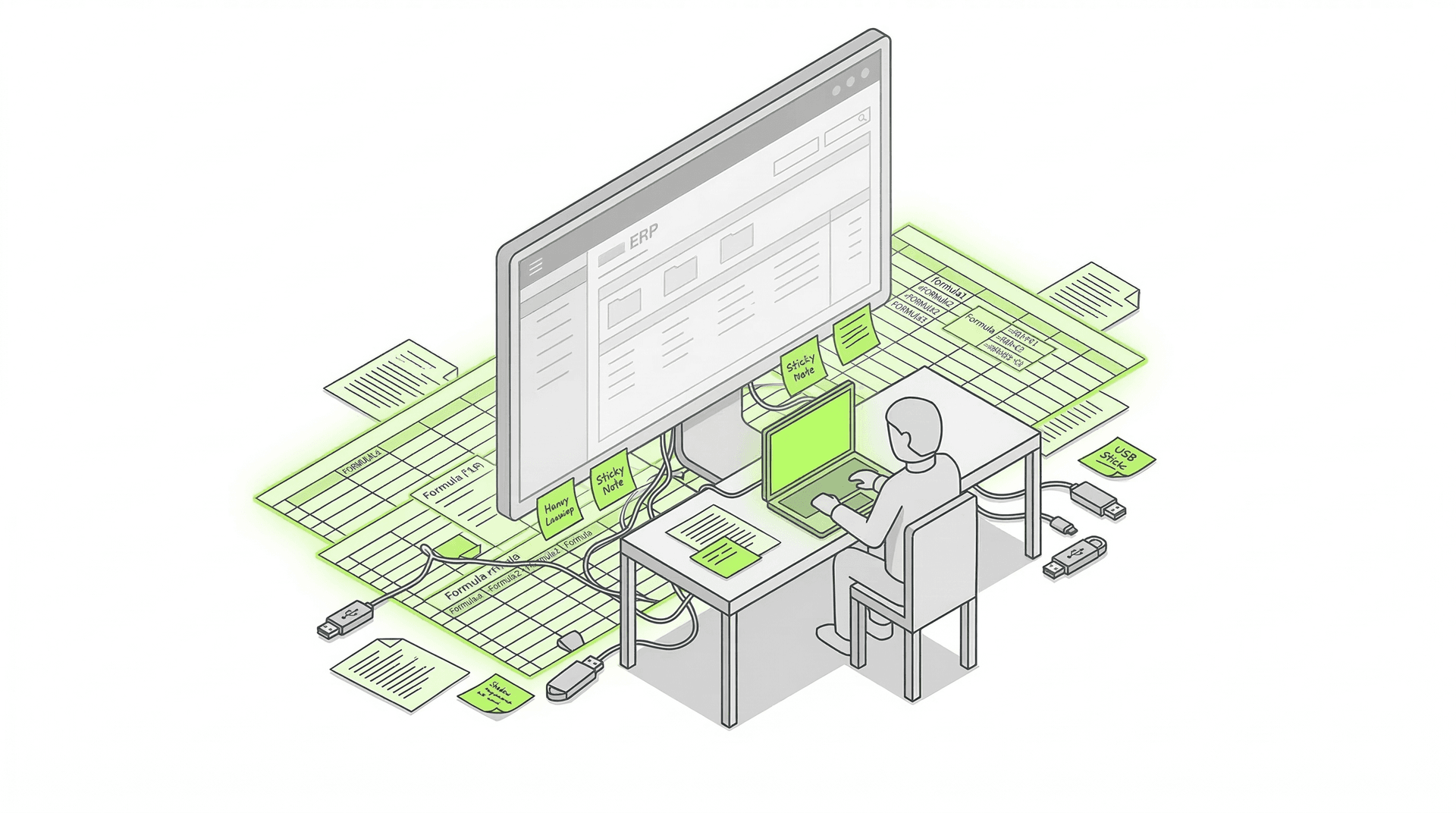
Invoicing, logistics planning, or real margin calculations happen in the corporate ERP for which six-figure licenses are paid. They happen in a spreadsheet.
It is a file hosted on a local desktop or a shared folder, often with names like Master_Planning_FINAL_v4.xlsx. And most worryingly: all the business logic that keeps the company running resides in the head of the only person who knows what happens if you touch cell J45. Let's call her "Martha".
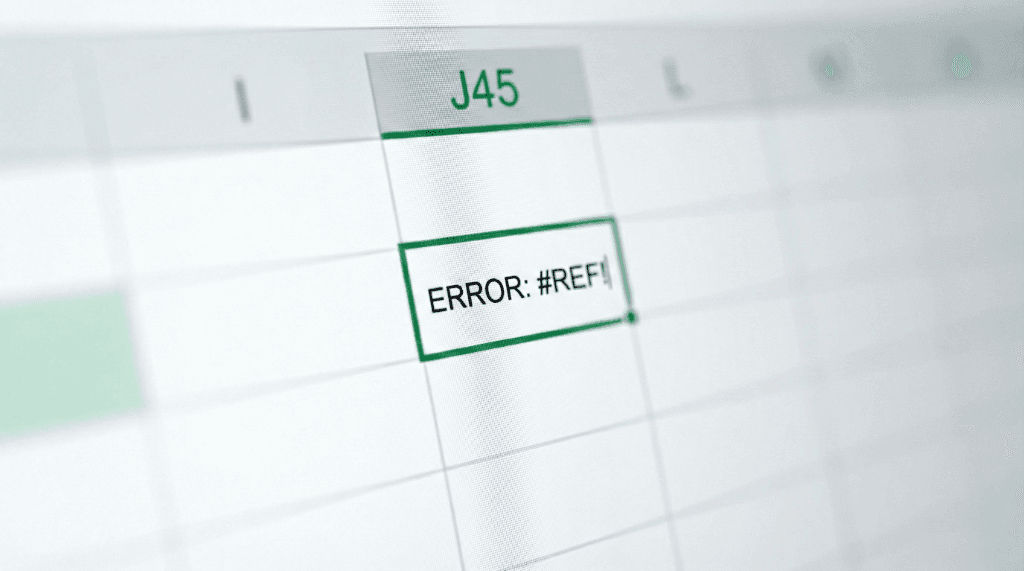 Excel reference error
This is not an anecdote; it is a systemic risk known as Shadow IT. And it is the clearest symptom that your corporate software has failed.
The Gap Between Corporate Software and the Trenches
Why does this happen? No one creates a "Death Excel" out of malice. It is created out of operational survival.
Standardized tools (SaaS, ERPs) are usually rigid. Designed under the premise of theoretical "best practices", they often clash with the dirty and complex reality of day-to-day operations. When the official system does not allow a necessary exception, or is too slow, the team looks for a way out.
Excel is the original "low-code" tool. It is flexible, immediate, and allows modeling the reality of the business as it is, not as the IT department thinks it should be.
However, what starts as a temporary solution to get by on a Tuesday afternoon ends up becoming the backbone of the operation three years later. And that is where flexibility turns into fragility.
The 3 Hidden Risks of "Martha's Excel"
When a critical process lives in a spreadsheet, your company assumes an invisible technical and operational debt that can be executed at the worst moment.
1. The "Bus Factor" (Continuity Risk)
If the person who built the macro gets sick, leaves the company, or simply goes on vacation, the process stops. No one else understands the tangled web of nested formulas. You have created a human Single Point of Failure. Your business continuity cannot depend on an employee's memory.
2. Data Integrity and Traceability
There is no real audit in an Excel. Someone can accidentally delete a critical formula or overwrite historical data, and the error can drag on for months before being detected. There are no logs, no robust version control, and no "rollback". Financial decisions are being made on data that no one can certify 100%.
3. Information Silos
That Excel is an island. Its data does not flow automatically to the CRM, nor to the warehouse system. It requires someone to manually "copy and paste" information, duplicating work and multiplying the possibility of human error. It is apparent efficiency, but structural inefficiency.
The SAUCO Solution: From Spreadsheet to Software Engineering
The typical reaction of a traditional IT department is to "ban" or "block" these files. That is a mistake.
If you eliminate Martha's Excel without understanding it, you paralyze the operation. That file contains years of encoded business knowledge. It is the most honest functional specification of what your company really needs.
At SAUCO, our approach as Forward Deployed Engineers (FDE) is radically different:
- We don't demonize Excel: We treat it as a validated high-fidelity prototype.
- Reverse Engineering Context: We sit down with the user ("Martha") to understand the deep logic. Why is this cell calculated this way? What exceptions does this macro handle?
- Professionalization: We turn that precarious logic into Production Software.
We create a custom web application that exactly replicates the flexibility the team needs, but on a robust architecture:
- Relational Database: Secure, unique, and queryable data.
- Multi-user Interface: The whole team can work at once without conflicts.
- Error Validation: The system prevents incorrect data entry.
- APIs: We connect that tool with the rest of your ecosystem (ERP, Banks, Logistics).
Transformation from unstructured data to solid structure
Conclusion: Scaling Operations
Having an Excel managing a critical process is not a crime, it is a maturity phase. It means you have found a way of working that works.
But if your company wants to scale, it cannot build skyscrapers on wooden scaffolding. The step from "Spreadsheet" to "Proprietary Platform" is the moment when a company stops playing defensively and starts building real technological assets.
Your real ERP shouldn't be Martha's Excel. It should be a tool as agile as that Excel, but as robust as SAP. And today, thanks to modern engineering, building that is possible.
Is your business living in a giant spreadsheet? Let's professionalize it.